


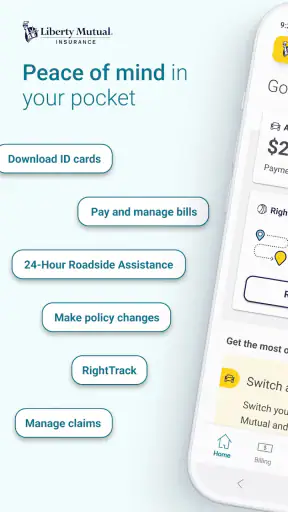

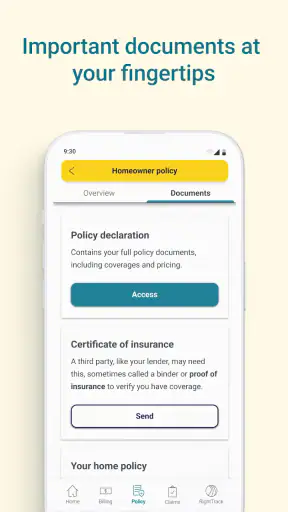
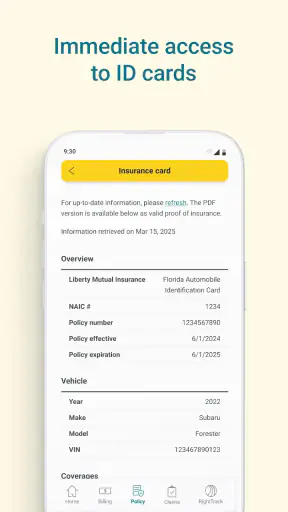
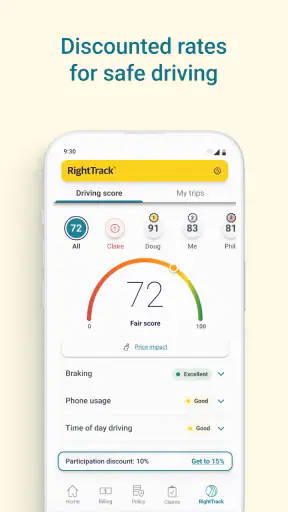

Managing insurance is rarely something I want to spend much time doing, which is why a dedicated mobile account can be useful when it removes small tasks from a busy day. After using Liberty Mutual Mobile, my view is that it works best as a practical companion for existing Liberty Mutual customers rather than as a replacement for every insurance conversation. It puts policy-related access in a more convenient place, but its value depends heavily on whether your insurance is already with Liberty Mutual.
The app comes from Liberty Mutual Insurance Company and sits in the finance category. It is free to download, carries an Everyone age rating, and has built a strong audience with an average rating of 4.6 from around 186 thousand ratings. That combination suggests a mature, widely used service, although a high store rating should be treated as a starting point rather than proof that every customer experience will be smooth.
What stands out when using the Liberty Mutual app
A useful everyday shortcut for policy customers
The clearest benefit is convenience. Instead of searching through email, paperwork, or a desktop browser whenever I need to deal with my insurance, I can start with the mobile app and keep the task in one place. That matters most for quick moments: checking something before a drive, looking for policy information after moving between devices, or handling an insurance-related task while away from a computer.
I would not describe the experience as exciting, and that is actually appropriate here. A finance app should make routine administration feel less demanding. The strongest part of this product is its role as a direct channel to Liberty Mutual services, not entertainment or financial discovery. If you already recognize the company’s terminology and have an active relationship with it, the app is easier to justify than a general-purpose finance tool.
One practical habit I recommend is opening the app before you urgently need it. Sign in while you are calm, look around the account area, and make sure you know where the information you commonly use is located. That preparation can save time after a minor incident or when another person in your household asks for insurance details unexpectedly. The benefit is not a flashy feature; it is reducing the number of steps between a question and the relevant account screen.
Where it fits better than ordinary alternatives
The usual alternatives are a mobile browser, saved policy documents, email searches, or calling an insurance representative. Each has a place, but the app is more natural for repeated account access. A browser can work well if you rarely need insurance information, while paper documents remain useful when a phone is unavailable. For regular customers, though, a dedicated app avoids repeatedly finding the correct website and navigating from the beginning.
That does not mean the app makes every alternative obsolete. A phone call is still preferable when the situation is complicated, sensitive, or dependent on personal advice. A browser may be better on a larger screen when I need to compare several pieces of information at once. I see the mobile app as the fastest first stop for ordinary account tasks, with human support and other channels still important when the issue moves beyond a straightforward request.
A less obvious advantage is consistency. Insurance information tends to be needed at inconvenient times, and relying on a single email or a folder of screenshots can create confusion when details change. Using the official app as the place I check first encourages a cleaner workflow: verify the current information there, then use other documents only when I need a record or broader context. That approach is especially helpful for households with more than one vehicle or policy-related responsibility.
Small workflows that make it more useful
My preferred way to use this kind of app is task-first rather than browsing-first. Before opening it, I decide whether I am checking account information, preparing for a conversation with Liberty Mutual, or trying to find something needed for an immediate situation. That sounds simple, but it prevents the app from becoming another place where I scroll without knowing what I need.
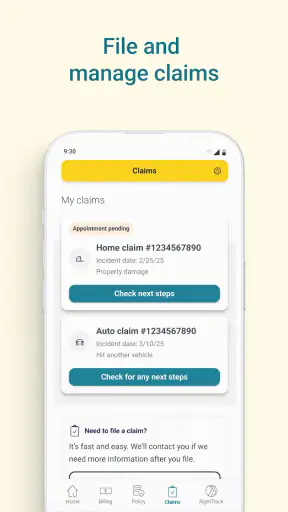
For a realistic example, imagine discovering a damaged side mirror in a parking lot before work. I would first use the app to orient myself around the relevant insurance account and gather the information needed for the next step. If the situation requires explanation, judgment, or a detailed claim discussion, I would then move to the appropriate Liberty Mutual support channel instead of trying to force a complicated conversation into a mobile interface. The app helps me begin in an organized way; it does not remove the need for careful follow-through.
Another useful trade-off is keeping the app for verification rather than treating it as the only record. When I receive important insurance documents or make a significant change, I would still keep the official material in a sensible place. The app is convenient for access, but convenience should not encourage me to discard records I may later need. This is one of the distinctions between a helpful mobile companion and a complete personal filing system.
It is also worth separating convenience from speed. A mobile app can shorten the route to an account, but the actual outcome may still depend on the type of request, the information involved, and Liberty Mutual’s support process. I would not choose it assuming every issue can be completed instantly. I would choose it because it gives me a more direct starting point than repeatedly locating documents or opening a browser.
The main limitation: it is tied to one insurer
The biggest weakness is also the most obvious boundary. This is a Liberty Mutual service, not a neutral dashboard for comparing multiple insurance providers. If I manage policies from different companies, the app will not become a single universal control center. I may still need separate apps, websites, or documents, which reduces its usefulness for people who want one place to oversee all their finances.
That limitation matters when choosing between a dedicated insurer app and a broader finance organizer. A general tool may be better for someone whose priority is seeing several providers together. Liberty Mutual Mobile is the more sensible choice when direct access to Liberty Mutual matters more than cross-provider consolidation. The right decision depends less on the app’s category label and more on where your policies actually live.
I also think users should keep their expectations realistic about mobile self-service. Insurance is full of exceptions, changing circumstances, and questions that do not fit neatly into a menu. If you need tailored advice about coverage, responsibility, or a complicated incident, relying only on the app could feel restrictive. I would use it to prepare, check, and initiate routine actions, then contact Liberty Mutual when a qualified person needs to interpret the situation.
There is a second kind of friction that appears with any account-based finance app: access and security can become more noticeable than in a casual app. I would avoid signing in on a borrowed device, keep my phone protected, and take care when handling insurance information in public. The app’s convenience is strongest when used as part of sensible account habits, not as a reason to ignore them.
Who should install it, and who can skip it
I would recommend it first to current Liberty Mutual customers who regularly need insurance information while away from a computer. It makes particular sense for people who drive often, manage more than one policy-related task, or prefer handling routine administration independently. It can also help someone who wants a consistent starting point before contacting support, because the relevant account context is closer at hand.
It is less compelling for someone who has no Liberty Mutual policy or is only comparing insurers. In that situation, installing a dedicated customer app adds little value. A person who rarely checks insurance details may also be perfectly comfortable with a browser or stored documents. Likewise, users who want a broad overview of banking, investments, bills, and several insurers should look for a wider finance solution rather than expecting this app to cover every area.
Families should think about responsibility as well as convenience. If several people share vehicles or household duties, the app may make access easier for the person who normally handles insurance, but that does not automatically solve questions about who should report an incident or preserve documentation. I would agree on a simple household process in advance: who checks the account, who gathers facts, and who contacts Liberty Mutual when the issue is not routine.
The app is free, which removes the main financial barrier to trying it. Still, free does not mean universally necessary. I would install it when the time saved during the year is worth having another account app on my phone. For a customer who interacts with Liberty Mutual only once in a long while, the mobile browser may remain the cleaner choice.
Version, maturity, and day-to-day expectations
The current version is 9.4.0, and the app has been available since April 26, 2011. That long history gives it the feel of an established customer service product rather than a new experiment. It has passed the early stage where an app is still proving whether people will use it, and its audience now exceeds one million installs.
At the same time, maturity should not be confused with perfection. Established finance apps often evolve around account access and service needs, so screens or workflows can change over time. My advice is to judge it by whether it reliably helps with your own Liberty Mutual routine, not by expecting it to behave like a full banking platform or a universal insurance marketplace.
The minimum operating-system requirement is version 10. That is a practical detail to check before planning to use it on an older phone. For people with a compatible device, the more important question is whether they want a dedicated channel for Liberty Mutual. For people using older hardware, compatibility may be the first issue to resolve before considering convenience or workflow.
My verdict after weighing convenience against limits
My overall judgment is favorable but specific: Liberty Mutual Mobile is a sensible utility for Liberty Mutual customers who want quicker access to their insurance relationship, and it is not a general finance app that will replace every other tool. Its strongest evidence is practical rather than spectacular. It can reduce the effort of routine account checks, provide a familiar starting point when something needs attention, and fit more naturally into a phone-based day than scattered documents or repeated browser searches.
The trade-off is that its usefulness narrows sharply outside the Liberty Mutual ecosystem. It cannot solve the needs of someone searching for multi-insurer comparison, broad financial aggregation, or detailed personal advice. In complicated situations, I would treat the app as preparation and access, not as the final authority for every decision.
My recommendation is straightforward: install it if Liberty Mutual is your insurer and you value self-service, but keep a browser, your important records, and human support available for issues that need more context. That balance gives the app the role it handles best—making everyday insurance administration easier without pretending that a mobile screen can replace the full relationship behind an insurance policy.


